Carrito de compra
Su pedido cuenta con 0 productos
Envío gratis a partir de $389.00 (Consulta T&C)
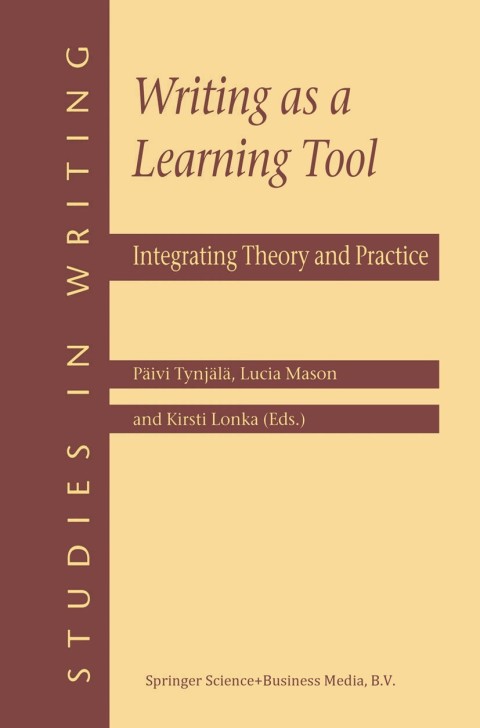
| ISBN: | 9789401007405 |
|---|---|
| Formato: | ePub |
| Idioma: | Inglés |
| Editorial: | Springer Nature |
| Tema: | Educación |
| Subtema: | Psicología de la educación |
| Año de publicación: | 2012-12-06 |
In a brief summary, the debate concerning the nature of writing processes is about whether the essential characteristic of expertise in writing is a matter of mastering problem-solving strategies. In this respect, the role of social and interactive factors, such as writers familiarity with the particular genre in which they are writing and their relationship with the discourse community in which they are participating, have been pointed out (e.g. Nystrand, 1989). According to the socio-interactive approach, which refers to Vygotskys theory, the composition process is a dialogue between the writer and the reader made possible by socially shared knowledge. The meaning of a text is a social construct that is negotiated between the reader and the writer through the medium of the text. The importance of motivational aspects has also been highlighted by two main lines of research, studies of the relationship between writing and self-efficacy (e.g. Pajares & Johnson, 1994, 1996) and studies of the role of interest in the production of expository texts (e.g. Albin, Benton & Khramtsova, 1996; Benton, Corkill, Sharp, Downey, Khramtsova, 1995; Hidi & McLaren, 1990, 1991). Self-efficacy, in this context individuals beliefs about their ability to produce certain types of texts, have been found to be predictive of writing skills, strategy use and writing performance.








 Este sitio web utiliza cookies para mejorar la experiencia del usuario y asegurar su funcionamiento con eficacia.
Al utilizarlo usted acepta el uso de cookies.
Este sitio web utiliza cookies para mejorar la experiencia del usuario y asegurar su funcionamiento con eficacia.
Al utilizarlo usted acepta el uso de cookies.