Carrito de compra
Su pedido cuenta con 0 productos
Envío gratis a partir de $389.00 (Consulta T&C)
| ISBN: | 9783031380280 |
|---|---|
| Formato: | ePub |
| Idioma: | Inglés |
| Editorial: | Springer Nature |
| Tema: | Ciencia |
| Subtema: | Ciencias de la Tierra general |
| Año de publicación: | 2023-08-07 |
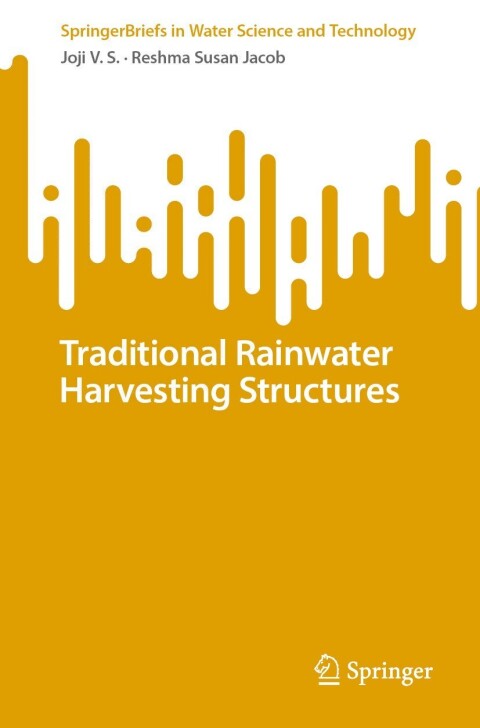
This book contains detailed information about the traditional rainwater structures. Harvesting rainwater is becoming as a practical adaptation strategy for urban areas that are vulnerable to climate alteration. In the past, rainwater harvesting was more significant than it is today. Studies show that a variety of traditional and age-old rainwater gathering techniques were created or put into use in reaction to earlier climate change incidents. According to history, both floods and droughts were frequent occurrences in ancient India. Perhaps this explains why each region of the nation has its own traditional water gathering practices that are representative of the local physical and cultural diversity. All of these methods can be seen as a concept of harvesting rain whenever and wherever it falls. Water makes up 70.9 % of the Earths surface, mainly in the form of oceans and seas. Water is found in modest proportions as 1.7 % groundwater, 1.7 % glaciers and ice caps in Antarctica and Greenland, vapour, clouds (ice and liquid water suspended in air), and 0.001% precipitation in the air. Evaporation, transpiration, evapo-transpiration, condensation, precipitation, root absorption, percolation, infiltration, base flow and runoff are processes that water goes through on its way to the sea.







 Este sitio web utiliza cookies para mejorar la experiencia del usuario y asegurar su funcionamiento con eficacia.
Al utilizarlo usted acepta el uso de cookies.
Este sitio web utiliza cookies para mejorar la experiencia del usuario y asegurar su funcionamiento con eficacia.
Al utilizarlo usted acepta el uso de cookies.