Carrito de compra
Su pedido cuenta con 0 productos
Envío gratis a partir de $389.00 (Consulta T&C)
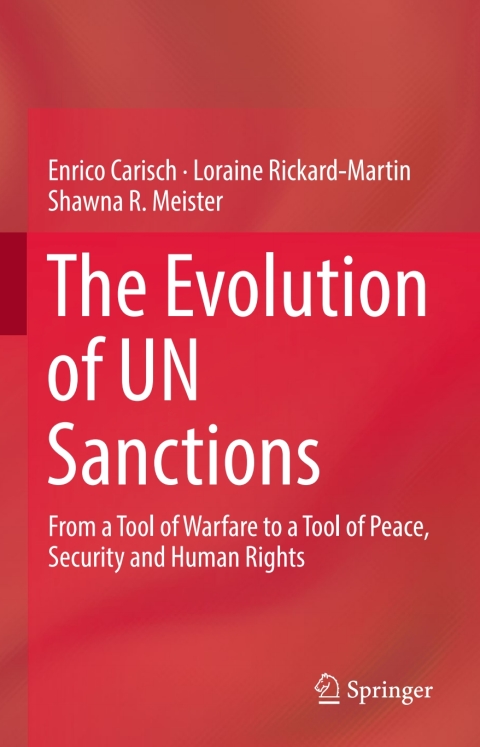
| ISBN: | 9783319600055 |
|---|---|
| Formato: | Page Fidelity |
| Idioma: | Inglés |
| Editorial: | Springer Nature |
| Tema: | Ciencias sociales |
| Subtema: | Criminología |
| Año de publicación: | 2017-10-27 |
Marking the 50th anniversary of UN sanctions, this work examines the evolution of sanctions from a primary instrument of economic warfare to a tool of prevention and protection against global conflicts and human rights abuses. The rise of sanctions as a versatile and frequently used tool to confront the challenges of armed conflicts, terrorism, the proliferation of weapons of mass destruction and violations of international humanitarian and human rights law, is rooted in centuries of trial and error of coercive diplomacy. The authors examine the history of UN sanctions and their potential for confronting emerging and future threats, including: cyberterrorism and information warfare, environmental crimes, and corruption. This work begins with a historical overview of sanctions and the development of the United Nations system. It then explores the consequences of the superpowers Cold War stalemate, the role of the Non-Aligned Movement, and the subsequent transformation from a blunt, comprehensive approach to smart and fairer sanctions. By calibrating its embargoes, asset freezes and travel bans, the UN developed a set of tools to confront the new category of risk actors: armed non-state actors and militias, global terrorists, arms merchants and conflict minerals, and cyberwarriors. Section II analyzes all thirty UN sanctions regimes adopted over the past fifty years. These narratives explore the contemporaneous political and security context that led to the introduction of specific sanctions measures and enforcement efforts, often spearheaded for good or ill by the permanent five members of the Security Council. Finally, Section III offers a qualitative analysis of the UN sanctions system to identify possible areas for improvements to the current Security Council structure dominated by the five veto-wielding victors of World War II. This work will be of interest to researchers and practitioners in criminal justice, particularly with an interest in security, as well as related fields such as international relations and political science.



 Este sitio web utiliza cookies para mejorar la experiencia del usuario y asegurar su funcionamiento con eficacia.
Al utilizarlo usted acepta el uso de cookies.
Este sitio web utiliza cookies para mejorar la experiencia del usuario y asegurar su funcionamiento con eficacia.
Al utilizarlo usted acepta el uso de cookies.