Carrito de compra
Su pedido cuenta con 0 productos
Envío gratis a partir de $389.00 (Consulta T&C)
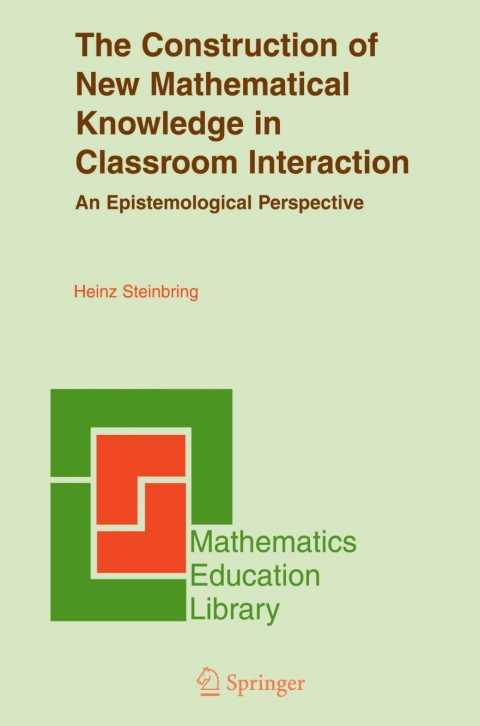
| ISBN: | 9780387242538 |
|---|---|
| Formato: | Page Fidelity |
| Idioma: | Inglés |
| Editorial: | Springer Nature |
| Tema: | Educación |
| Subtema: | Métodos y materias de enseñanza matemática |
| Año de publicación: | 2006-03-30 |
Mathematics is generally considered as the only science where knowledge is uni form, universal, and free from contradictions. ?Mathematics is a social product - a net of norms, as Wittgenstein writes. In contrast to other institutions - traffic rules, legal systems or table manners -, which are often internally contradictory and are hardly ever unrestrictedly accepted, mathematics is distinguished by coherence and consensus. Although mathematics is presumably the discipline, which is the most differentiated internally, the corpus of mathematical knowledge constitutes a coher ent whole. The consistency of mathematics cannot be proved, yet, so far, no contra dictions were found that would question the uniformity of mathematics" (Heintz, 2000, p. 11). The coherence of mathematical knowledge is closely related to the kind of pro fessional communication that research mathematicians hold about mathematical knowledge. In an extensive study, Bettina Heintz (Heintz 2000) proposed that the historical development of formal mathematical proof was, in fact, a means of estab lishing a communicable ?code of conduct" which helped mathematicians make themselves understood in relation to the truth of mathematical statements in a co ordinated and unequivocal way.










 Este sitio web utiliza cookies para mejorar la experiencia del usuario y asegurar su funcionamiento con eficacia.
Al utilizarlo usted acepta el uso de cookies.
Este sitio web utiliza cookies para mejorar la experiencia del usuario y asegurar su funcionamiento con eficacia.
Al utilizarlo usted acepta el uso de cookies.