Carrito de compra
Su pedido cuenta con 0 productos
Envío gratis a partir de $389.00 (Consulta T&C)
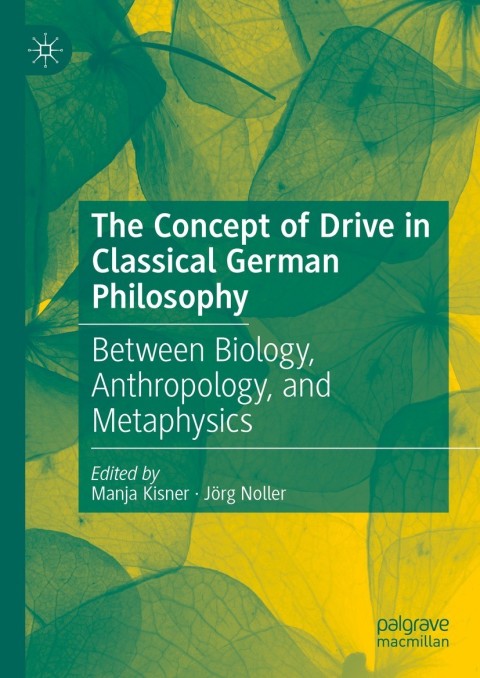
| ISBN: | 9783030841607 |
|---|---|
| Formato: | ePub |
| Idioma: | Inglés |
| Editorial: | Springer Nature |
| Tema: | Filosofía |
| Subtema: | Movimientos idealismo |
| Año de publicación: | 2021-11-24 |
This volume gathers a collection of fourteen original articles discussing the concept of drive in classical German philosophy. Its aim is to offer a comprehensive historical overview of the concept of drive at the turn of the 19th century and to discuss it both historically and systematically. From the 18th century onward, the concept of drive started to play an important role in emerging disciplines such as biology, anthropology, and psychology. In these fields, the concept of drive was used to describe the inner forces of organic nature, or, more particularly, human urges and desires. But it was in the period of classical German philosophy that this concept developed into an important philosophical concept crucial to Kant and post-Kantian idealistic systems. Reflecting the complexity of this concept, the volume first discusses historical sources of drive theories in Leibniz, Reimarus, and Blumenbach. Afterwards, the volume presents the philosophical accounts of drives in Kant, Fichte, Schelling, and Hegel, and also gives a systematic overview of other important drive theories that were formed around 1800 by Herder, Goethe, Jacobi, Novalis, Reinhold, Schiller, and Schopenhauer.









 Este sitio web utiliza cookies para mejorar la experiencia del usuario y asegurar su funcionamiento con eficacia.
Al utilizarlo usted acepta el uso de cookies.
Este sitio web utiliza cookies para mejorar la experiencia del usuario y asegurar su funcionamiento con eficacia.
Al utilizarlo usted acepta el uso de cookies.