Carrito de compra
Su pedido cuenta con 0 productos
Envío gratis a partir de $389.00 (Consulta T&C)
| ISBN: | 9789811617225 |
|---|---|
| Formato: | ePub |
| Idioma: | Inglés |
| Editorial: | Springer Nature |
| Tema: | Matemáticas |
| Subtema: | Probabilidad y estadística general |
| Año de publicación: | 2021-04-28 |
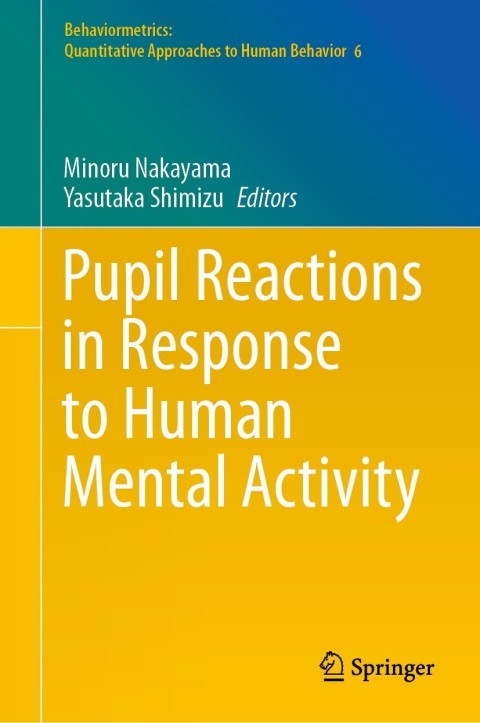
 This book focuses on a development for assessing mental changes using eye pupil reactions, namely extracting emotional change from the response to evaluate the viewers interest in visual information.  The pupil of the eye reacts to both brightness and emotional state, including interest, enjoyment, and mental workload. Because pupillary change is a biological signal, various artifacts influence measurements of eye images. Technical procedures are required to extract mental activities from pupillary changes, and they are summarized here step by step, although some procedures contain earlier techniques such as analog video processing.  This study examines the possibility of estimating the viewers interest and enjoyment of viewing movies by measuring the dynamic pupillary changes, blinking, and subjective interest responses. In evaluation of pupil size, there was a significant difference in pupil size between the higher and the lower shot for the degree of subject interest response in each kind of movies. The first part of the book shows a pupil reaction model for brightness changes to extract mental activities. Pupil reactions were observed for various visual stimuli in brightness changes. With regard to the characteristics of pupillary changes, a model with a three-layer neural network was developed and the performance was evaluated. Characteristics of pupil reactions during model development are summarized here. The second part examines the possibility of estimating the viewers interest and enjoyment of television programs by measuring dynamic pupillary changes, blinking, and subjective interest responses. The final part describes a development of estimation model of pupil size for blink artifact. The model development was able to estimate pupillary changes and pupil size while the viewer was blinking and was applied to pupillary changes in viewing television programs.Â









 Este sitio web utiliza cookies para mejorar la experiencia del usuario y asegurar su funcionamiento con eficacia.
Al utilizarlo usted acepta el uso de cookies.
Este sitio web utiliza cookies para mejorar la experiencia del usuario y asegurar su funcionamiento con eficacia.
Al utilizarlo usted acepta el uso de cookies.