Carrito de compra
Su pedido cuenta con 0 productos
Envío gratis a partir de $389.00 (Consulta T&C)
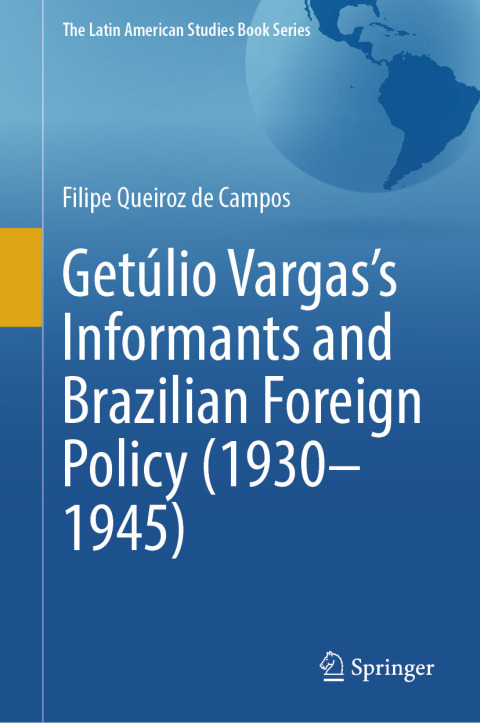
| ISBN: | 9783032328045 |
|---|---|
| Formato: | ePub |
| Idioma: | Inglés |
| Editorial: | Springer Nature |
| Tema: | Historia |
| Subtema: | Historia |
| Año de publicación: | 2026-07-30 |
This book argues that Getúlio Vargas cultivated a sophisticated and often clandestine network of informants that, by operating outside or in parallel to formal diplomatic channels, profoundly shaped the countrys international relations. This approach fundamentally challenges prevailing historical narratives that suggest Vargass disinterest in foreign policy or the autonomy of his chancellors, shedding new light on Vargass approach to foreign affairs. Through the identification of 50 informants, 10 of whom were consistently active for 15 years, this book underscores the strategic importance of this clandestine network. Vargass informants provided him personally with critical information for government management, especially in foreign policy, often through secret missions that transcended their official hierarchical roles and with opportunities to contribute to the formulation of foreign policy, even if their primary roles were linked to domestic interests. Informants frequently communicated directly with Vargas via secret channels and “secure carriers,” circumventing the official mail system, thereby establishing a parallel diplomatic structure that was also deployed for internal surveillance and political control. Furthermore, Vargass “presidential diplomacy” was not solely about optimizing external relations, but also included the use of foreign posts to defang and monitor political rivals. The book contributes a more complex and nuanced understanding of Vargass foreign policy, emphasizing his profound personal agency, the strategic utility of his clandestine network, and a pattern of distrust of bureaucratic structures. The book characterizes Vargass approach to international relations as profoundly pragmatic, driven by a consistent effort to leverage global power rivalries to Brazils advantage. This challenges simplistic labels like "Americanophile" or "Germanophile," suggesting that Vargass actions were strategic rather than ideologically rigid.



 Este sitio web utiliza cookies para mejorar la experiencia del usuario y asegurar su funcionamiento con eficacia.
Al utilizarlo usted acepta el uso de cookies.
Este sitio web utiliza cookies para mejorar la experiencia del usuario y asegurar su funcionamiento con eficacia.
Al utilizarlo usted acepta el uso de cookies.