Carrito de compra
Su pedido cuenta con 0 productos
Envío gratis a partir de $389.00 (Consulta T&C)
| ISBN: | 9783032155085 |
|---|---|
| Formato: | ePub |
| Idioma: | Inglés |
| Editorial: | Springer Nature |
| Tema: | Filosofía |
| Subtema: | Ética y Filosofía Moral |
| Año de publicación: | 2026-04-15 |
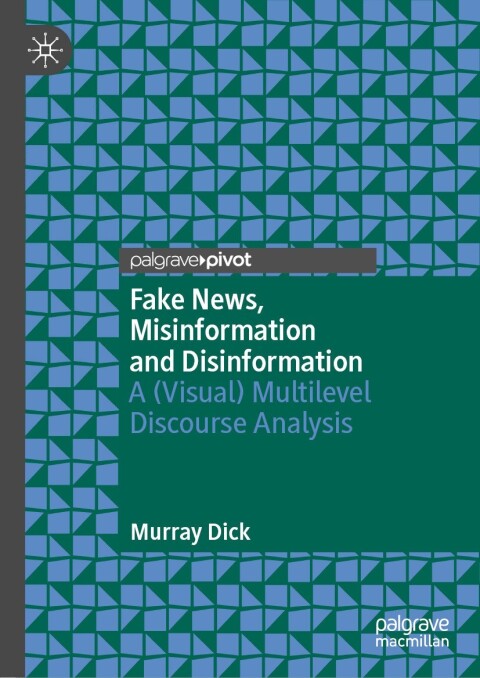
This book seeks to make sense of competing ideas about misinformation, by setting out a post-critical discourse analysis of the ways in which it is framed, relative to both adjacent and antecedent concepts - including fake news, disinformation, bullshit, conspiracy theory, propaganda, post-truth politics, hoaxing, rumour and gossip. Is misinformation an existential threat to modern life, or is it merely a symptom of an anxious age? To answer this question, it is first necessary to understand how the phenomenon is conceptualised. Researchers and experts from a wide range of disciplines have long grappled with the problem of misinformation; but they do not always make use of the same lexicon when it comes to describing it. This book makes use of the TATI multilevel discourse method, an approach developed by the author, to make sense of some common ways in which the concept is discussed. For some, misinformation is a concept best understood as a Theory that provides an alternative explanation for newsworthy (and often contested) political and cultural events. For others, it is an Aesthetic form (or a form of spectacle) arising not from the distribution of lies as such, but rather from the very subversion of reason itself. Some see it is a Tool; false information that is instrumentalised to sow discord, or to acquire financial return. Alternatively, some see it more as an expression of Ideology; a function of the power structures that invisibly shape our lives. These discourses overlap, and indeed, it is not uncommon to find in any given opinion on misinformation, the presence of more than one of these discourses, each serving a particular rhetorical end. The emphasis in these discursive patterns in what people say about misinformation, this book concludes, may help us to identify some new ways of thinking about misinformation, best understood visually, as representing either ?thick? or ?thin? manifestations of the form.


 Este sitio web utiliza cookies para mejorar la experiencia del usuario y asegurar su funcionamiento con eficacia.
Al utilizarlo usted acepta el uso de cookies.
Este sitio web utiliza cookies para mejorar la experiencia del usuario y asegurar su funcionamiento con eficacia.
Al utilizarlo usted acepta el uso de cookies.