Carrito de compra
Su pedido cuenta con 0 productos
Envío gratis a partir de $389.00 (Consulta T&C)
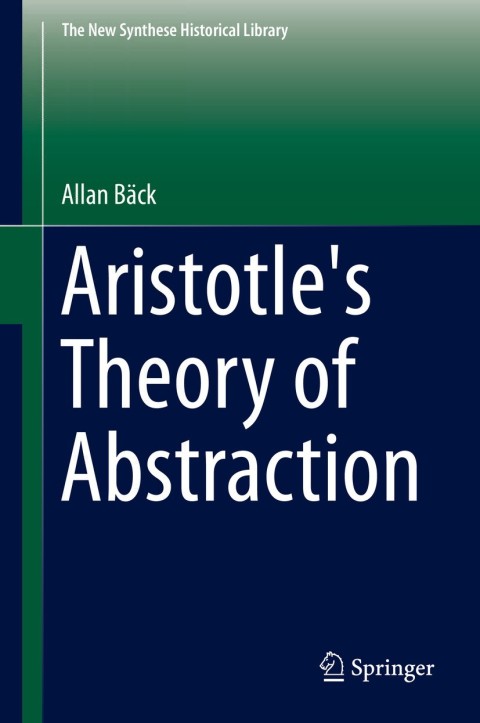
| ISBN: | 9783319047591 |
|---|---|
| Formato: | ePub |
| Idioma: | Inglés |
| Editorial: | Springer Nature |
| Tema: | Filosofía |
| Subtema: | Lógica |
| Año de publicación: | 2014-07-02 |
This book investigates Aristotle views on abstraction and explores how he uses it. In this work, the author follows Aristotle in focusing on the scientific detail first and then approaches the metaphysical claims, and so creates a reconstructed theory that explains many puzzles of Aristotle thought. Understanding the details of his theory of relations and abstraction further illuminates his theory of universals. Some of the features of Aristotle theory of abstraction developed in this book include: abstraction is a relation; perception and knowledge are types of abstraction; the objects generated by abstractions are relata which can serve as subjects in their own right, whereupon they can appear as items in other categories. The author goes on to look at how Aristotle distinguishes the concrete from the abstract paronym, how induction is a type of abstraction which typically moves from the perceived individuals to universals and how Aristotle metaphysical vocabulary is relational.’ Beyond those features, this work also looks at how of universals, accidents, forms, causes and potentialities have being only as abstract aspects of individual substances. An individual substance is identical to its essence; the essence has universal features but is the singularity making the individual substance what it is. These theories are expounded within this book. One main attraction in working out the details of Aristotle views on abstraction lies in understanding his metaphysics of universals as abstract objects. This work reclaims past ground as the main philosophical tradition of abstraction has been ignored in recent times. It gives a modern version of the medieval doctrine of the threefold distinction of essence, made famous by the Islamic philosopher, Avicenna.







 Este sitio web utiliza cookies para mejorar la experiencia del usuario y asegurar su funcionamiento con eficacia.
Al utilizarlo usted acepta el uso de cookies.
Este sitio web utiliza cookies para mejorar la experiencia del usuario y asegurar su funcionamiento con eficacia.
Al utilizarlo usted acepta el uso de cookies.