Carrito de compra
Su pedido cuenta con 0 productos
Envío gratis a partir de $389.00 (Consulta T&C)
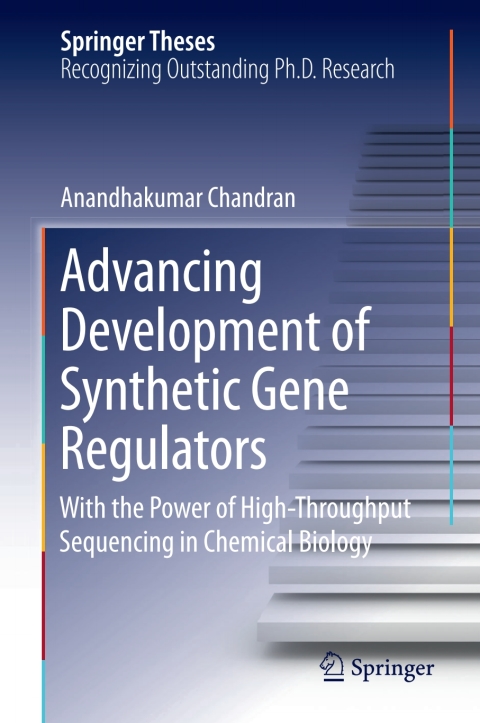
| ISBN: | 9789811065477 |
|---|---|
| Formato: | Page Fidelity |
| Idioma: | Inglés |
| Editorial: | Springer Nature |
| Tema: | Ciencia |
| Subtema: | Biotecnología |
| Año de publicación: | 2017-09-19 |
This book focuses on an “outside the boxâ€? notion by utilizing the powerful applications of next-generation sequencing (NGS) technologies in the interface of chemistry and biology. In personalized medicine, developing small molecules targeting a specific genomic sequence is an attractive goal. N-methylpyrrole (P)–N-methylimidazole (I) polyamides (PIPs) are a class of small molecule that can bind to the DNA minor groove. First, a cost-effective NGS (ion torrent platform)-based Bind-n-Seq was developed to identify the binding specificity of PIP conjugates in a randomized DNA library. Their biological influences rely primarily on selective DNA binding affinity, so it is important to analyze their genome-wide binding preferences. However, it is demanding to enrich specifically the small-molecule-bound DNA without chemical cross-linking or covalent binding in chromatinized genomes. Herein is described a method that was developed using high-throughput sequencing to map the differential binding sites and relative enriched regions of non-cross-linked SAHA-PIPs throughout the complex human genome. SAHA-PIPs binding motifs were identified and the genome-level mapping of SAHA-PIPs-enriched regions provided evidence for the differential activation of the gene network. A method using high-throughput sequencing to map the binding sites and relative enriched regions of alkylating PIP throughout the human genome was also developed. The genome-level mapping of alkylating the PIP-enriched region and the binding sites on the human genome identifies significant genomic targets of breast cancer. It is anticipated that this pioneering low-cost, high through-put investigation at the sequence-specific level will be helpful in understanding the binding specificity of various DNA-binding small molecules, which in turn will be beneficial for the development of small-molecule-based drugs targeting a genome-level sequence.Â







 Este sitio web utiliza cookies para mejorar la experiencia del usuario y asegurar su funcionamiento con eficacia.
Al utilizarlo usted acepta el uso de cookies.
Este sitio web utiliza cookies para mejorar la experiencia del usuario y asegurar su funcionamiento con eficacia.
Al utilizarlo usted acepta el uso de cookies.